The controversy over bullfighting has been fuelling heated debate in France for decades. You have probably wondered why bullfighting is not banned despite all the controversy. This article reveals the surprising reasons behind the survival of this bullfighting tradition in certain regions. I invite you to explore the legal, cultural and economic aspects that allow the corrida to endure. You will discover how French law authorises this practice and what is at stake for its future.
A legal exemption for local traditions
To understand why bullfighting is not banned in France, we first need to look at the legal framework surrounding it. You may be surprised to learn that French law provides a specific exception for this practice.
French laws on animal cruelty
In France, animal protection laws are generally strict. The Criminal Code punishes acts of cruelty towards animals. However, the corrida benefits from a special exemption.
This exception is explained by the recognition of local traditions. In certain regions of the South, the corrida has been rooted in the culture for generations. Lawmakers therefore chose to preserve the practice in the name of cultural heritage.
The Grammont law and its amendments
The Grammont law, passed in 1850, was the first French legislation to protect animals. Initially, it banned the mistreatment of domestic animals in public. But in 1951, a crucial amendment was made.
This amendment states that the law does not apply to bullfights where an uninterrupted local tradition can be invoked. It is this change that allows the corrida to continue to exist legally in certain French regions.
The geography of bullfighting in France
Now that we have looked at the legal framework, let us turn to the geographical distribution of bullfighting in France. You will see that it is far from uniform across the country.
The départements where the tradition lives on
The corrida is only authorised in certain départements in the South of France. It is found mainly in the South-West (Landes, Gers, Pyrénées-Atlantiques) and the South-East (Gard, Hérault, Bouches-du-Rhône).
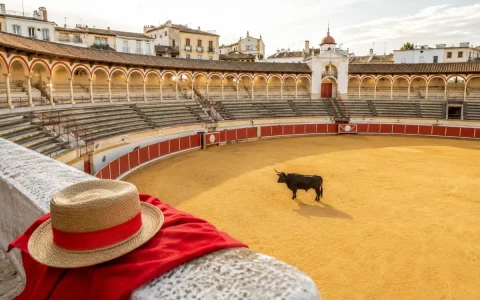
These regions have a long bullfighting history, influenced by their proximity to Spain. The Arènes de Nîmes, for example, have been hosting corridas since the 19th century. I had the opportunity to attend a corrida in Nîmes and was struck by the special atmosphere there.
How local cultures influence legislation
French legislation recognises the importance of local traditions. In these regions, the corrida is an integral part of the culture, just like the food or the popular festivals.
Defenders of the corrida, such as André Viard, emphasise this cultural dimension. They argue that the corrida is not a mere spectacle but an art rooted in regional identity.
Political resistance to a ban
You may be wondering why, despite the controversy, the corrida has not been banned. The answer lies partly in the political sphere.
The role of political groups in keeping the corrida alive
Several local and national political groups actively support the corrida. They see it as a matter of preserving cultural heritage and a source of economic benefits for the regions concerned.
These groups wield considerable influence over political decisions. During parliamentary debates on possible bans, they mobilise their arguments and their networks to maintain the status quo.
Supporters’ arguments in defence of the tradition
Defenders of the corrida put forward several arguments. They stress its cultural importance, its positive economic impact and its role in the ecological balance of fighting-bull ranches.
Simon Casas, the famous bullfighting promoter, often highlights the artistic dimension of the corrida. He compares it to a form of living theatre, in which man and animal face each other in a dramatic ballet.
Public opinion on bullfighting
The corrida sparks passionate debate among the French public. Let us look at how opinion is divided on this controversial practice.
Public opinion statistics
Polls show that public opinion has shifted in recent years. A recent survey indicated that 74% of French people were in favour of banning bullfighting. However, in the regions where it takes place, support remains stronger.
These figures reflect a broader social debate about our relationship with animals. In discussions with people around me, I have found that the subject is often divisive, even within families.
The impact of political debate on perception
Political debates about the corrida influence public perception. Every time a bill aiming to ban it is debated, the subject returns to the media spotlight.
These debates give each side an opportunity to set out its arguments. Opponents, such as Aymeric Caron, emphasise animal suffering. Supporters point to the cultural and economic importance of the practice.
The weight of cultural tradition
Tradition plays a crucial role in keeping the corrida alive. Let us explore the history and heritage of this practice in France.
History and heritage of the corrida
The corrida appeared in France in the 19th century, imported from Spain. It first took root in the South-West before spreading to other regions of the South.
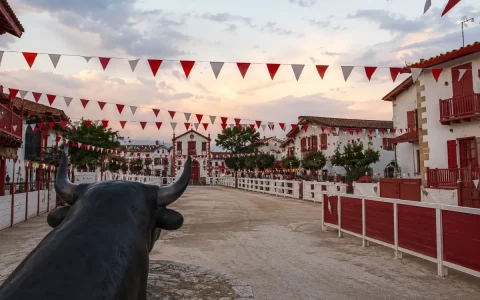
Over the decades, it became an integral part of local festivities. Ferias such as Bayonne’s attract thousands of people every year. I attended the Bayonne feria a few years ago and was impressed by the festive atmosphere throughout the town.
The economic impact of bullfighting
The economic aspect is a major argument for defenders of the corrida. Let us examine its impact on the local economy.
The role of the corrida in local tourism
Corridas and ferias attract many tourists, both French and foreign. These events generate significant revenue for hotels, restaurants and local shops.
For example, the Nîmes feria attracts nearly a million visitors every year. That is a considerable boost for the town’s economy.
Jobs and economic activity generated
The bullfighting sector creates many direct and indirect jobs: breeders, toreros, bullring staff, and also craftspeople specialising in making costumes or bullfighting accessories.
The Fédération des Sociétés Taurines de France estimates that the sector accounts for several thousand jobs in the country.
The influence of aficionados on decisions
Bullfighting enthusiasts, known as aficionados, play an important role in keeping this tradition alive. Their influence is felt at several levels.
Aficionado associations are very active. They organise events, take part in public debates and lobby local officials. Their passion and commitment help keep bullfighting culture alive.
In the regions concerned, aficionados often make up a significant share of the electorate. Local politicians therefore pay attention to their demands. On my travels in the South, I have seen that the corrida remains a frequent and passionate topic of conversation.
Recent proposals and future prospects
The question of the future of bullfighting in France remains open. Recent developments deserve our attention.
Recent legislative measures
In recent years, several bills aiming to ban the corrida have been tabled in the National Assembly. Although none has succeeded so far, they reflect a shift in public debate.
The most recent, put forward by MP Aymeric Caron in 2022, revived discussion of the subject. Even though it was rejected, it brought each side’s arguments to light.
Future prospects for the practice
The future of bullfighting in France remains uncertain. On the one hand, public opinion seems increasingly opposed to the practice. On the other, its cultural and economic roots in certain regions remain strong.
Possible changes are being considered, such as corridas without the kill. Some see this as a possible compromise, others as a betrayal of the tradition. The debate is far from over and will no doubt continue to stir French society in the years to come.
A debate that remains open
In this article, we have explored the many factors that explain why bullfighting is not banned in France. From the legal exemption to the economic impact, by way of the weight of tradition, the reasons are complex and sometimes surprising.
I have been lucky enough to attend several corridas and ferias in the South of France. These experiences have helped me better understand the passion of aficionados, even though I remain divided about the practice. The unique atmosphere of these events, blending tradition and popular celebration, left a lasting impression on me.
As you will have gathered, the debate is far from over. The future of the corrida in France will depend on changes in public opinion, political decisions and the ability of its defenders to adapt the practice. One thing is certain: the subject will continue to spark passionate discussion.
Whether you are for or against, I hope this article has helped you better understand the issues surrounding the corrida. Feel free to share your opinion in the comments. And if you visit the South of France, take the time to talk to the locals about it. You may discover new perspectives!