No two ferias are alike, and choosing among the best ferias in France without any pointers means risking missing out on an experience that really suits you:
- Nîmes, Dax and Bayonne top the ranking for taurine tradition, attendance and festive intensity.
- Atmosphere, corrida, family-friendly format: each feria has its own identity, and some are far more accessible to newcomers than you might think.
- Lesser-known ferias such as Vic-Fezensac or Parentis-en-Born offer rare authenticity, often far from the tourist crowds.
💡 Key takeaway
Nîmes remains the absolute benchmark for anyone wanting to experience the corrida in all its historical and festive dimensions. For a more accessible first experience, Dax or Bayonne are ideal gateways. Authenticity seekers will prefer the smaller-scale ferias of the South-West.
Feria de Nîmes, Dax, Bayonne: ranking the French ferias that really set the standard
Three towns. Three worlds. And yet each, in its own way, claims to be the French capital of the feria. What I have observed over the years is that the Nîmes-Dax-Bayonne debate cannot be settled by figures alone, even if the figures help put things in perspective.
Nîmes, the absolute benchmark of taurine tradition
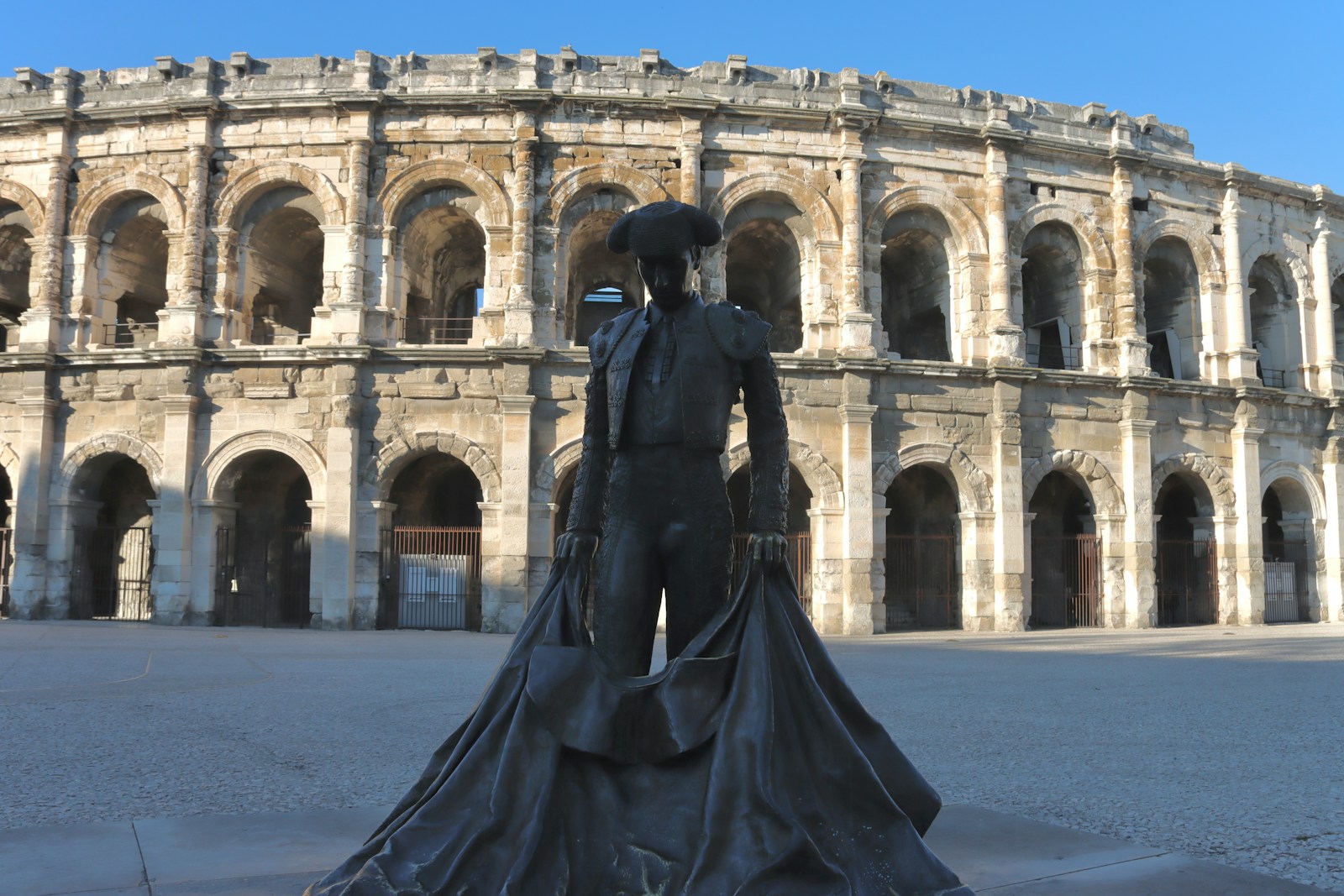
The Feria de Nîmes stands apart. Not because it is the biggest in volume, but because it combines popular festivity and the art of bullfighting in its most demanding form better than anywhere else. The 1st-century Roman amphitheatre serves as the setting for the corridas, and that honestly changes everything about the general atmosphere. Two ferias structure the year in Nîmes: the Feria de Pentecôte in May-June and the Feria des Vendanges in September, each with its own character. The figures speak for themselves: nearly 1.2 million visitors over six days at Pentecôte. If you want to understand what the corrida represents culturally in France, this is where it starts. For a precise overview of attendance and organisation, the data on the Feria de Nîmes and its visitors give a good idea of the event’s real scale.
The Feria de Pentecôte in Nîmes draws nearly 1.2 million festayres in six days, making the best ferias in France some of the busiest events in southern Europe.
Dax and Bayonne: two giants, two identities
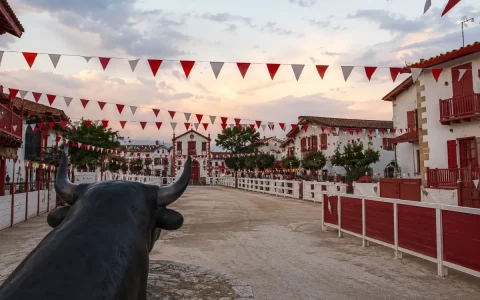
Dax and Bayonne are the South-West at its most intense. The Feria de Dax welcomed 1.4 million festayres over five days in 2024, making it the most attended feria in France in sheer volume. In short, the raw figures give Dax a slight quantitative edge. Except that Bayonne responds with an atmosphere many describe as incomparable: streets awash with white and red, bodegas spilling out onto the quays, bandas that never stop. The Feria de Bayonne lasts five days in early August, and the exceptional corridas of the Fêtes de Bayonne exceptional corridas of the Fêtes de Bayonne are eagerly awaited every year by aficionados as a major date in the French taurine calendar. Between the two? Dax for the ultimate party, Bayonne for the unique blend of Basque culture and bullfighting tradition. It is not a question of hierarchy, it is a question of what you are looking for.
The ferias of the South-West and Languedoc decoded by atmosphere, tradition and attendance
Beyond the top three, there is a dense network of ferias that deserve serious attention. The South-West and Languedoc account for most of the French taurine calendar, with events of very different personalities.
Béziers and Arles: taurine Languedoc in full force
The Feria de Béziers, in August, is often underestimated by those who have not experienced it. The town is radically transformed for five days, the peñas take over every alley, and the bullring is sold out for every corrida. It is a feria that makes no concessions to tourist staging: this is something raw, popular, rooted. I have spoken to festayres who skip Bayonne so as not to miss Béziers under any circumstances. Arles, for its part, plays in a different register. The Feria d’Arles opens with the Easter weekend, in an equally sumptuous Roman setting, and continues in September with the Feria du Riz. What I particularly appreciate in Arles is the way the course camarguaise sits alongside the corrida without one overshadowing the other. Both of Languedoc’s taurine traditions find their place there. The September Feria de Nîmes September Feria de Nîmes also offers an interesting alternative for those wishing to compare the atmosphere of the two big Nîmes ferias.
In Languedoc as in the Landes, the best ferias in France share one constant: the corrida is not a sideshow, it is the heart around which everything is organised.
Mont-de-Marsan and Vic-Fezensac: the must-sees of the Gers and the Landes
Mont-de-Marsan in July means the Feria de la Madeleine. Four intense days, a top-level taurine programme, and a town that lives to the rhythm of the encierros and abrivados. The Feria de la Madeleine in Mont-de-Marsan has built a solid reputation on the quality of its carteles, and serious aficionados regularly place it in their personal top 5. Vic-Fezensac is something else. Pentecôte, in the Gers, with a feria like no other in France: a town of 3,700 inhabitants that absorbs tens of thousands of festayres, bodegas open 24/7, a village-party atmosphere running at full throttle. That is where things get tricky for those seeking comfort: Vic-Fezensac does not forgive half-measures. Either you dive in completely, or you remain a spectator. And remaining a spectator means missing out.
- Pure festive atmosphere: Vic-Fezensac, Bayonne, Béziers
- Top-level taurine tradition: Nîmes, Mont-de-Marsan, Arles
- Balance of festivity and culture: Dax, Arles, Mont-de-Marsan
Family-friendly, corrida-free or little-known ferias: the ones worth the detour
Not all ferias revolve around the corrida, and that is just as well. There are very different formats, suited to audiences who have never set foot in a bullring, or who are simply looking for another approach to the taurine fiesta.
Are there genuine ferias without corridas in France?
The short answer: yes. But with important nuances. Some ferias have chosen to programme only courses camarguaises or novilladas, more accessible to the general public and without the kill. This is the case for several medium-sized ferias in the Gard and Hérault, where the taurine tradition takes a different form but remains very much present. Other events billed as “ferias” are in fact local festivals with bandas and bodegas, without any taurine element at all. That is not a value judgement, but it is useful to know what to expect. What I have noticed is that families with children often find what they are looking for at ferias such as Parentis-en-Born, in the Landes, where the atmosphere is warm and the format far more accessible than in Bayonne or Béziers. Indeed, the unique taurine feria in France cannot be reduced to a single model: each feria builds its own identity around the traditions of its area.
The best ferias in France for families are not necessarily the biggest: Parentis-en-Born and some ferias in the Gard offer a taurine and festive immersion without the dense crowds of the major events.
The rising ferias that nobody mentions yet
Honestly: nobody talks about them enough. There is a handful of ferias on the rise, attracting aficionados who want to rediscover what the big ferias have sometimes lost as they have grown: closeness, improvisation, the feeling of being part of something alive rather than a carefully calibrated event.
Parentis-en-Born deserves a special mention, in the Landes, for its ability to bring generations together around a sincere taurine tradition. But there are even more discreet ferias, in the Gers and the Hérault, whose carteles are beginning to attract aficionados from far afield. What distinguishes a real feria from a simple village fête is the link between the street and the bullring: when the two answer each other, when the banda passing the bodega announces the time of the corrida, when the whole town lives on taurine time, you are at a feria. Otherwise, it is a nice party. Nothing more.
- Parentis-en-Born: family-friendly format, Landes tradition preserved
- Ferias of the Gers: authenticity, carteles on the rise, crowds still manageable
The great ferias of France compared at a glance
Attendance, taurine tradition, atmosphere and accessibility: the main French ferias side by side.
| Feria | Attendance | Taurine tradition | Festive atmosphere | Family-friendly |
|---|---|---|---|---|
| Nîmes (Pentecôte) | ~1.2 million / 6 days | ⭐⭐⭐⭐⭐ | ⭐⭐⭐⭐⭐ | ⚠️ Dense crowds |
| Dax | 1.4 million / 5 days | ⭐⭐⭐⭐ | ⭐⭐⭐⭐⭐ | ⚠️ High intensity |
| Bayonne | Not disclosed | ⭐⭐⭐⭐ | ⭐⭐⭐⭐⭐ | ⚠️ Crowds, packed streets |
| Béziers | Not disclosed | ⭐⭐⭐⭐ | ⭐⭐⭐⭐⭐ | ⚠️ Raw atmosphere |
| Mont-de-Marsan | Not disclosed | ⭐⭐⭐⭐⭐ | ⭐⭐⭐⭐ | ✅ Well-managed format |
| Parentis-en-Born | Not disclosed | ⭐⭐⭐ | ⭐⭐⭐ | ✅ Ideal for families |
Millions of people, every summer, for the same festivals
The Documentaire Société channel has listed the major festivals of the South-West, from April to the end of summer. A useful overview for placing the ferias in their region.
Every feria has its own truth, and that is what makes choosing difficult
The best ferias in France cannot really be ranked; they are chosen. Nîmes embodies taurine tradition at its most demanding, Bayonne and Dax carry a street energy unique to the South-West, and ferias such as Vic-Fezensac or Parentis-en-Born retain something that big events sometimes end up losing: the feeling of being inside, not looking on.
What this changes in practice is the state of mind you arrive with. Knowing the character of a feria before setting down your cool box there is the difference between an evening you endure and a memory that lasts. Festayre culture cannot be improvised; it has to be prepared.
And what if the real question were not “which is the best?” but “for whom, and for what?”
Sources:
- Wikipédia, definition and historical context of ferias in France and Europe: https://fr.wikipedia.org/wiki/Feria
- Génération Voyage, selection and description of the best ferias in France, including Nîmes and the ferias of the South-West: https://generationvoyage.fr/ferias-france/
- Génération Voyage, overview of the ferias in Nouvelle-Aquitaine, including Bayonne, Dax and the ferias of the Landes: https://generationvoyage.fr/ferias-nouvelle-aquitaine/
- Cparici, guide to ferias and corridas in France, with details of the taurine programmes and host towns: https://cparici.com/fr/ferias-corridas-en-france/
What you are still wondering about French ferias
Which feria should a first-time festayre who doesn’t know where to start choose?
Dax is often the best entry point. The town is human-sized, the atmosphere instantly warm, and the taurine calendar varied enough to introduce a novice without overwhelming them. Bayonne remains more intense, Nîmes more demanding in terms of tradition: best to go there once you have the basics.
Are French ferias comparable to the great Spanish ferias such as Pamplona or Seville?
The registers differ, but not the level of passion. Pamplona impresses with its encierros, Seville with its splendour. Nîmes holds its own on the quality of its carteles and its Roman setting. What sets French ferias apart is often the closeness between the street party and the bullring, which is hard to find elsewhere.
How long does a feria usually last in France, and how do you find accommodation without blowing your budget?
Most major ferias last four to six days. For accommodation, booking several months in advance remains the golden rule: prices triple as the event approaches. Neighbouring towns within a 30-kilometre radius often offer much more reasonable rates, with a shuttle or car-sharing to reach the heart of the festivities.