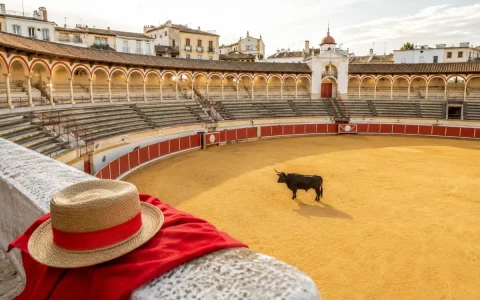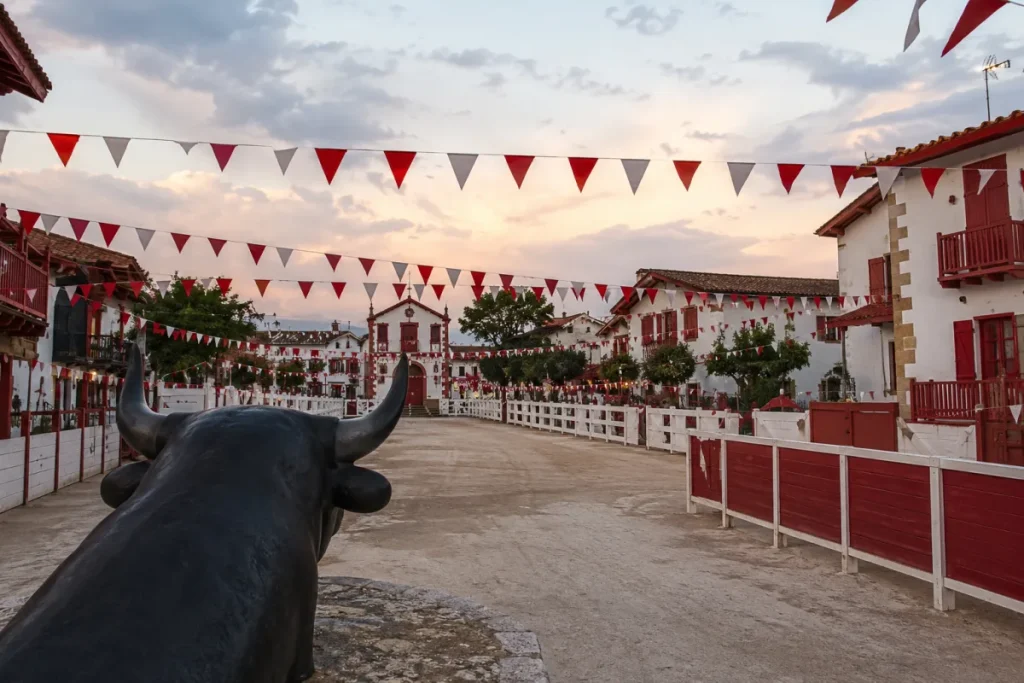
From the Gard to the Landes, the best ferias in France are nothing alike: choosing between Nîmes, Bayonne, Dax or Béziers means choosing an atmosphere, a tradition, a way of living the bullfighting festival:
- Nîmes and Béziers offer the most complete bullfighting programmes, with top-tier corridas in Roman arenas steeped in history.
- Bayonne and Dax bet on non-stop festive excitement, bodegas buzzing day and night and a very strong Basque or Landes identity.
- Vic-Fezensac, Mont-de-Marsan and Parentis offer a more intimate atmosphere, ideal for a first feria or for escaping the crowds without sacrificing authenticity.
💡 Key takeaways
For a first time, Nîmes remains the absolute benchmark: electric atmosphere, Roman arena, demanding bullfighting programme. The ferias of the Landes appeal more to those looking for a party above all. And the small ferias of the South-West really deserve a closer look.
Nîmes, Dax, Bayonne and the rest: French ferias ranked by atmosphere and attendance
Ranking French ferias is already taking a stance. Every festayre has their own favourite, every town defends its title. That said, some figures and some reputations speak for themselves.
Nîmes: the absolute benchmark for bullfighting tradition
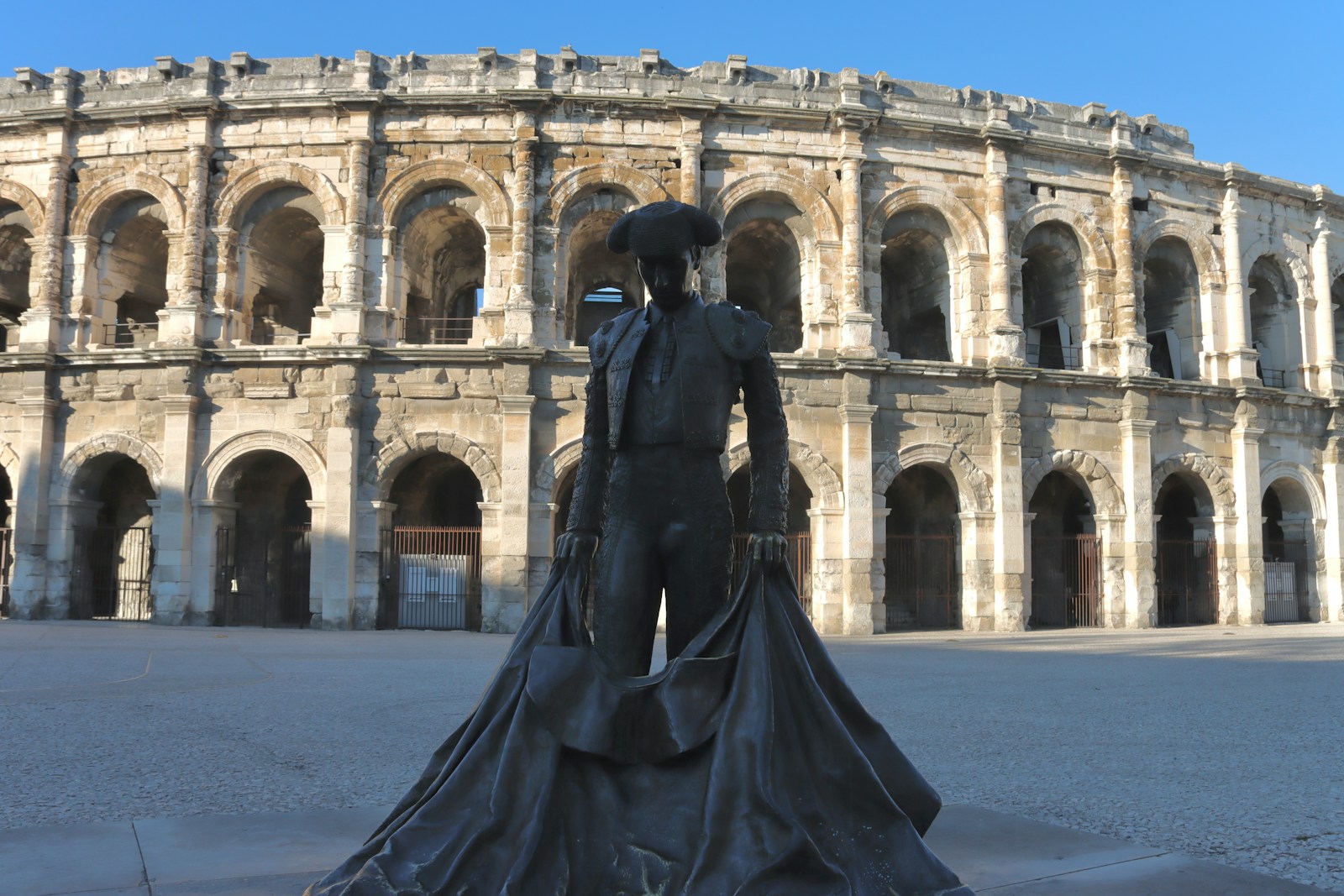
Nîmes holds a special place in the landscape of French ferias, and it is not a matter of local pride. It is a matter of programme, arena and history. The Roman arena, among the best preserved in the world, hosts top-tier corridas featuring the most eagerly awaited figures of international toreo. The Feria de Pentecôte (six days, late May) and the Feria des Vendanges (in September) offer two distinct events, each with its own colour and its own crowd. What I have observed over several editions: the Feria des Vendanges attracts more connoisseurs, fewer first-timers, and an atmosphere more focused on pure bullfighting.
If you want to understand the attendance and the profile of the visitors who make this event what it is, the figures on the Nîmes feria and its visitors give a concrete measure of what Nîmes represents on a national scale.
The Feria de Pentecôte in Nîmes welcomes nearly 1.2 million visitors in six days, making it one of the biggest ferias in France and a leading bullfighting event in Europe.
Dax and Bayonne: the party before the bulls
Dax and Bayonne work on a different model. The atmosphere is more festive, more continuous, sometimes noisier (which, incidentally, is not a flaw depending on what you are after). The bodegas run day and night, the peñas take over the streets, and the corrida coexists with a general excitement that can spill over onto it.
Dax welcomed 1.4 million festayres in five days at its last edition, a figure that beats Nîmes in raw volume over a shorter period. Bayonne, for its part, regularly claims the title of France’s biggest feria in terms of overall attendance across the week. The difference between the two? Dax remains more focused on Landes tradition, with abrivados and bandidos running through the town. Bayonne is more urban, more cosmopolitan, and its Basque identity gives the festival a particular character.
For anyone who wants to understand exactly what the bullfighting programme offers on the Atlantic side, a look at the corridas of the Fêtes de Bayonne shows the gap with Nîmes in terms of standards and the rank of the toreros on the bill.
Béziers, Arles, Mont-de-Marsan: three very distinct characters
Béziers is often underrated. Its arena, one of the largest in France, hosts corridas packed with emotion, and the town lives its feria with an intensity that always surprises first-time visitors. Arles plays a heritage card comparable to Nîmes: a Roman arena, a demanding bullfighting programme, but a more low-key atmosphere and a town on a human scale. Mont-de-Marsan sits somewhere in between: a major South-West feria, a strong Landes identity, and a bullfighting programme that has been moving upmarket for several years.
- Nîmes: number 1 for bullfighting tradition, the arena and the standard of the corridas
- Dax and Bayonne: leaders for festive atmosphere and raw attendance
- Béziers and Arles: the serious alternatives for bullfighting aficionados in a historic setting
Lesser-known ferias that are really worth the trip
There are the ferias everyone talks about, and there are the others. The ones you discover by chance, or on the recommendation of a friend from the South-West, and which end up becoming your favourites. Honestly: nobody talks about them enough.
Vic-Fezensac: small town, big reputation
Vic-Fezensac is a case apart. This Gers village of barely 4,000 inhabitants turns its feria into a national event every year at Pentecost, attracting festayres from all over France and even from abroad. What I particularly appreciate here: the human scale. You bump into the toreros in town, the peñas are approachable, and the corrida is experienced up close in an arena where there is no bad seat. It is exactly the opposite of the anonymity of the big ferias.
The bullfighting programme is serious, sometimes bolder than elsewhere in its choice of carteles. In short, for a bullfighting aficionado who wants to get off the beaten track, Vic is a no-brainer.
Parentis-en-Born and the family ferias of the Landes
Parentis-en-Born represents another face of the feria: more family-friendly, more accessible, rooted in Landes tradition with its cow races and bull games that do not involve a kill. For families with children or for those who want to approach bullfighting culture without a corrida, it is an ideal way in. The atmosphere is warm, the bodegas friendly, and the lake at Parentis adds a setting the big towns cannot offer.
Other small ferias in the Landes and the Gers are worth a detour: Aire-sur-l’Adour, Saint-Sever, Nogaro. Each has its rituals, its historic peñas, its local traditions. These are ferias where the locals celebrate first and foremost for themselves, and you can feel it.
France’s lesser-known ferias often offer what the big ones can no longer guarantee: closeness to bullfighting tradition and an atmosphere where every festayre still counts.
What budget, what outfit and how to choose your first feria
The question comes up every spring. Which feria should you choose for a first time? And how much does it actually cost?
A realistic budget for a feria in France
The budget varies enormously depending on your choices. The feria itself is often free as far as the street atmosphere goes: the bodegas, the parades and the abrivados cost nothing. What weighs is accommodation (which soars during the big ferias, especially in Nîmes and Bayonne), corrida tickets and food.
- Corrida tickets: from 20 to 100 euros depending on the category and the feria, sometimes more for gala corridas in Nîmes
- Accommodation: budget generously, book early (several months ahead for Nîmes and Bayonne), or opt for neighbouring towns with a shuttle
- Food and bodegas: allow 30 to 60 euros a day depending on your habits
For the ferias of the Landes and the Gers, the accommodation budget is much more affordable, and some corridas are cheaper. That is a real advantage for a first time. To dig deeper into the programme of the Nîmes feria in September and plan which dates to block out, it is best to check the official calendar from the start of the year.
The outfit and the social code of the feria
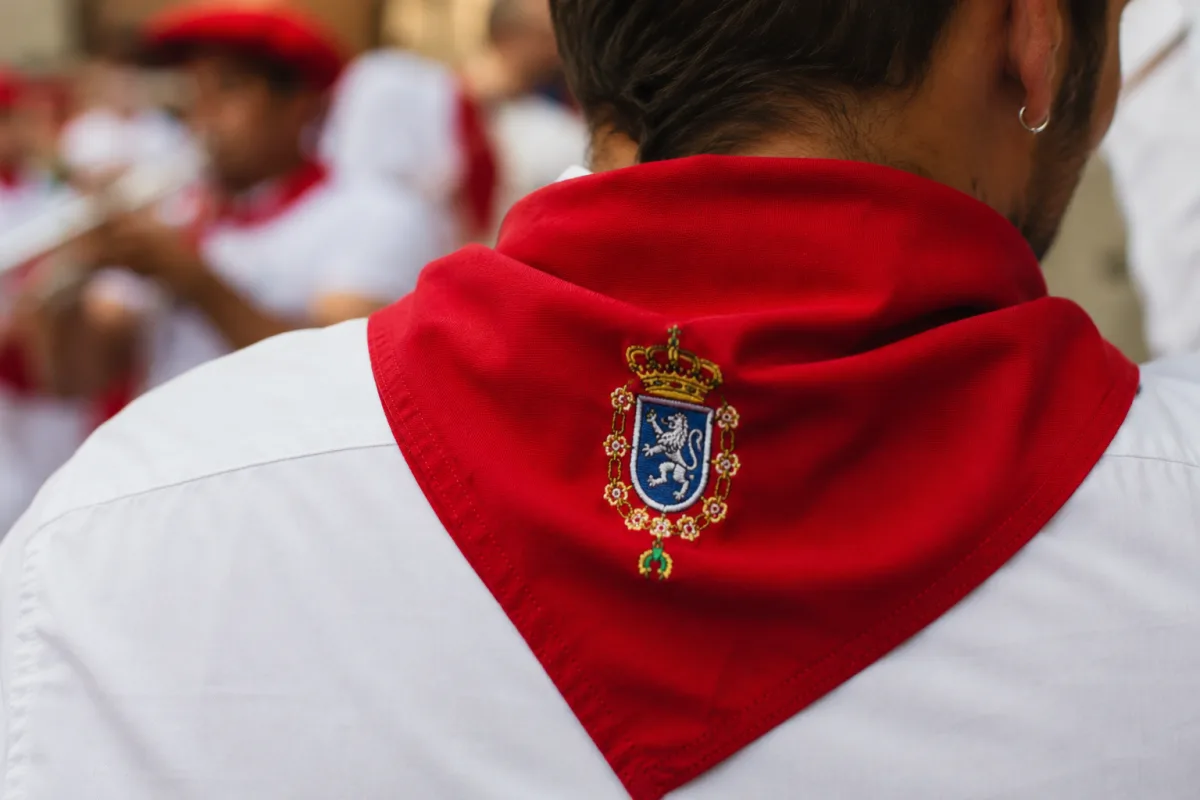
The feria outfit is not a whim: it is a sign of belonging to the community of festayres. White and bright colours in Nîmes and Béziers (Camargue and gardian tradition), red and white in Bayonne (Basque colours), freer outfits in the Landes. It is not compulsory, but going along with it, even partially, radically changes the way you are welcomed.
What I have noticed: first-timers who arrive in the right outfit fit in much faster, strike up conversations, and find themselves invited into private bodegas. Those who turn up as hurried tourists miss the essentials. The outfit is a sign that you come with respect.
Choosing your first feria according to your profile
There is no universal answer here. Except that a few criteria help you decide.
For a first corrida and a serious bullfighting immersion: Nîmes, without hesitation. The Roman arena, the standard of the carteles, the unique atmosphere of the town at Pentecost. For pure partying and street atmosphere: Bayonne or Dax. For a gentle, family approach without a corrida: Parentis or the small Landes ferias. And for those who want something in between, a feria on a human scale with a real bullfighting programme, the Feria de la Madeleine in Mont-de-Marsan is an option that often comes up in regulars’ recommendations.
Choosing your first feria means, above all, choosing what you want to experience: bullfighting tradition at the best ferias in France, or the popular festival in all its generosity. Both are worth the trip.
Every feria has its own profile: the comparison to help you choose
Six ferias, five key criteria to find the one that really matches what you are looking for.
| Feria | Bullfighting level | Festive atmosphere | Attendance | Ideal for | Accommodation budget |
|---|---|---|---|---|---|
| Nîmes (Pentecost) | ⭐⭐⭐⭐⭐ | ⭐⭐⭐⭐ | 1.2 million visitors | A first serious corrida | ⚠️ Book 3 months ahead |
| Bayonne | ⭐⭐⭐ | ⭐⭐⭐⭐⭐ | Among the highest in France | Urban, cosmopolitan party | ⚠️ Book very early |
| Dax | ⭐⭐⭐ | ⭐⭐⭐⭐⭐ | 1.4 million in five days | Landes tradition, bodegas | ⚠️ Neighbouring town advised |
| Béziers / Arles | ⭐⭐⭐⭐ | ⭐⭐⭐ | High, historic setting | Bullfighting aficionados | ✅ More affordable |
| Vic-Fezensac | ⭐⭐⭐⭐ | ⭐⭐⭐⭐ | National despite 4,000 inhabitants | Human-scale immersion | ✅ Affordable |
| Parentis-en-Born | ⭐⭐ | ⭐⭐⭐⭐ | Local and family | Families, a gentle introduction | ✅ Very affordable |
A bull stopped in Caveirac: tradition in action
The Jean Philippe Bouchoux channel captured this rare moment at the Caveirac fête, where a bull is stopped according to the codes of Camargue tradition.
Every feria tells the story of a different France
The best ferias in France cannot be judged on a single criterion. Nîmes dominates on bullfighting tradition, Bayonne and Dax on collective energy, the small ferias of the South-West on raw authenticity. It is not a fixed ranking: it is a personal choice, about what you want to take home with you on Sunday evening when the festival ends.
In practical terms, it changes everything about your preparation. Knowing what you are looking for avoids disappointment and lets you live the bullfighting festival to the full, from the first paso doble to the last bodega.
The real question is not “which is the best feria?” but “for whom?”
Sources:
- Wikipedia, definition and historical context of ferias in France and Europe: https://fr.wikipedia.org/wiki/Feria
- Génération Voyage, ranking of the 7 best ferias in France with descriptions of their atmospheres and traditions: https://generationvoyage.fr/ferias-france/
- cparici.com, complete guide to ferias and corridas in France, including lesser-publicised events: https://cparici.com/fr/ferias-corridas-en-france/
- Petit Futé, overview of French ferias and their roots in local traditions: https://www.petitfute.com/p1-france/c1170-manifestation-evenement/c1250-fetes/c246-feria/
What festayres ask most often
What is the biggest feria in France in terms of attendance?
Bayonne regularly claims the title of France’s biggest feria across the week. Dax, for its part, welcomed 1.4 million festayres in five days at its last edition, beating Nîmes in raw volume over a shorter period. It all depends on the criterion used.
Are there ferias without corridas, suitable for families?
Yes, and it often comes as a discovery for newcomers. The small ferias of the Landes, such as Parentis-en-Born, offer cow races and bull games without a kill. The atmosphere remains festive and warm, Landes tradition is very much present, and children naturally find their place.
What is the difference between the Dax feria and the Bayonne feria?
Dax is rooted in Landes tradition: abrivados, bandidos and races run through the town, giving the festival a very strong rural and popular character. Bayonne is more urban, more cosmopolitan, driven by a strong Basque identity. Both are festive, but each has its own quite distinct soul.