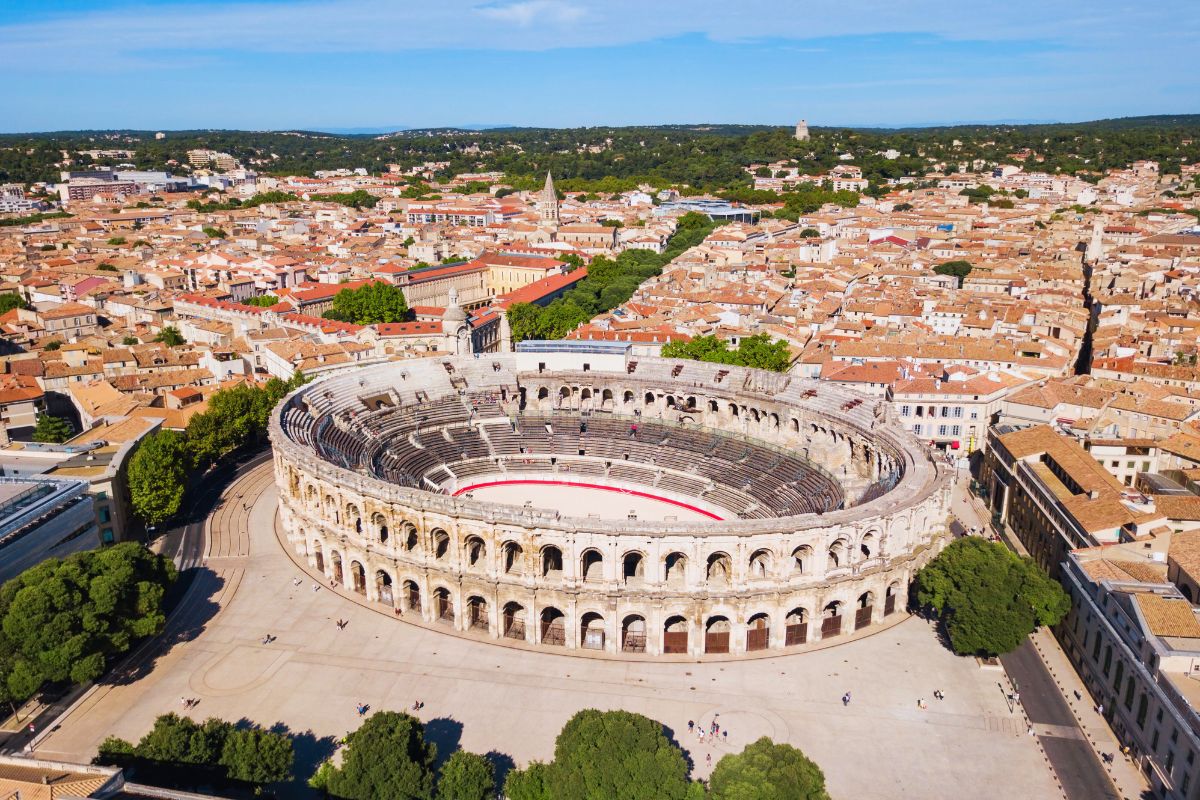
Have you ever wondered how many inhabitants Nîmes has today? The Roman city, famous for its arena and its Maison Carrée, is undergoing significant demographic change that is shaping its contemporary identity. Between its rich historical heritage and its growing modernity, Nîmes attracts new residents every year, won over by its Mediterranean quality of life. The latest official figures reveal fascinating trends in the population of Nîmes and its urban development.
In 2025, Nîmes has precisely 151,868 inhabitants according to the latest official INSEE data, making it the largest city in the Gard and one of the major cities of Occitanie. This population is characterised by growing diversity, in terms of both age and origin, reflecting the dynamism and appeal of this two-thousand-year-old city. Our comprehensive analysis presents the key figures, recent demographic trends and the detailed make-up of the population of Nîmes in 2025.
Social tensions in Nîmes: the Pissevin incident
The diversity of the population of Nîmes mentioned in our introduction sometimes shows itself in social tensions, particularly in certain neighbourhoods such as Pissevin. A video that recently went viral illustrates these complex dynamics. It shows an altercation between a resident of this sensitive neighbourhood and Jean Messiha, a political figure, during a television programme. This heated exchange reflects the challenges of integration and social cohesion facing the largest city in the Gard despite its growing appeal. The Pissevin neighbourhood, known for its socio-economic difficulties, is in stark contrast with the tourist image of the Roman city. This video, found online to illustrate our article, is not the property of our blog. It bears witness to the sociological realities that accompany the demographic change in Nîmes.
How many inhabitants does Nîmes have in 2025 according to official data?
According to the latest official data published by the French National Institute of Statistics and Economic Studies (INSEE), the population of Nîmes in 2025 stands at 151,868 inhabitants. This figure is the result of the latest census and the demographic projections drawn up by expert statisticians.
The prefecture of the Gard thus confirms its position as the 19th largest city in France by population, consolidating its status as a major urban centre in the south of the country. This demographic stability shows the balance the city has managed to strike between development and preserving its quality of life.
Census method and reliability of the data
The official figures come from a rigorous methodology combining field surveys and statistical analysis. Since 2004, INSEE has used an annual census method that provides more regularly updated data. For municipalities with more than 10,000 inhabitants, such as Nîmes, a representative sample of 8% of the population is surveyed each year.
This method gives an accurate picture of the demography of Nîmes, with an estimated margin of error of less than 0.5%. The results include both the municipal population (people whose usual residence is in Nîmes) and the population counted separately (students, military personnel, etc.).
The Nîmes conurbation beyond the municipality
If we consider the Nîmes urban area as a whole, the population reaches almost 265,000 inhabitants in 2025. This area covers 52 municipalities whose economy and daily life are closely linked to the Roman city. Nîmes Métropole, the conurbation community, brings together 39 municipalities with a total of 257,000 inhabitants.
These figures reflect the appeal of Nîmes and its growing influence over an area that extends well beyond its administrative boundaries, creating a dynamic catchment area at the heart of Occitanie.
Demographic change in Nîmes and recent trends
Over recent decades, the city of Nîmes has undergone significant demographic change. Since the 1990s, Nîmes has shown steady growth in its population, although the pace has varied from period to period.
Sustained growth since the 2000s
Between 2000 and 2010, Nîmes recorded population growth of around 0.8% a year, rising from 137,740 to 146,709 inhabitants. This growth slowed slightly between 2010 and 2020, with an average annual rate of 0.6%, reaching 149,633 inhabitants in 2020. The 2020-2025 period confirms this trend, with a gain of around 2,235 new residents.
This positive trend contrasts with some medium-sized French towns facing population decline. Nîmes benefits from positive net migration, thanks in particular to its Mediterranean setting and property prices that are more affordable than on the coast.
The factors behind recent trends
Several factors explain these demographic trends. First, the economic appeal of the Occitanie region is a driving force. The development of transport infrastructure such as the Paris-Nîmes TGV line has also improved the city’s accessibility.
The quality of life, the Mediterranean climate and the wealth of heritage also attract retirees looking for a pleasant setting. At the same time, the university presence (more than 10,000 students) contributes to a partial rejuvenation of the population.
Recent urban projects such as the Musée de la Romanité and the Hoche-Sernam eco-district also contribute to the city’s renewed appeal. These developments go hand in hand with a diversified housing policy to meet the needs of a growing population.

Breakdown of the population of Nîmes by age and sex
Having explored demographic change in Nîmes, let us now look at its structure by age and sex, a crucial element in understanding the social dynamics of the city. Current demographic data reveal a balanced split between men and women, albeit with a few notable features.
Structure of the population of Nîmes by sex
The population of Nîmes has a slight female majority, typical of French urban areas. Women account for 52.6% of the total population compared with 47.4% men. This gap widens particularly in the over-65 age groups, where women are significantly more numerous because of their higher life expectancy.
In the central neighbourhoods, the proportion of women even reaches 54%, while some newer outlying areas show a better balance between the sexes. This breakdown has a direct influence on public policy in health and social services.
Age pyramid and ageing
Analysis by age reveals a demographic structure undergoing profound change. The 45-59 age group is the largest, accounting for 20.3% of the population. People over 60 now represent 28.4% of the inhabitants of Nîmes, a figure that has been rising steadily for a decade.
The gradual ageing of the population of Nîmes can be seen in a youth index (the ratio of under-20s to over-60s) that has fallen below 1, reaching 0.87 in 2025. This trend is particularly marked in the historic centre and established residential neighbourhoods.
At the same time, 15-29 year-olds make up 17.5% of residents, a stable proportion thanks in particular to the city’s appeal as a university town and the vocational training on offer. Children under 15 account for 16.8% of the population, with a higher concentration in outlying neighbourhoods where young families tend to settle.
Population density and urbanisation in Nîmes
Analysis of how the inhabitants of Nîmes are spread out reveals striking contrasts between the city’s different neighbourhoods. With an average density of 883 inhabitants per km², Nîmes has an urban profile typical of medium-sized cities in the south of France, combining very densely populated areas and more spacious ones.
Neighbourhoods with a high population concentration
The historic centre and neighbourhoods such as Pissevin and Valdegour have the highest population densities, sometimes exceeding 4,000 inhabitants per km². These urban areas, characterised by blocks of flats and collective housing, are the beating heart of the city. Conversely, outlying neighbourhoods such as Courbessac and Castanet have much lower densities, below 500 inhabitants per km².
This uneven distribution is explained in particular by the urban history of Nîmes and the particular geography of its territory, partly constrained by the garrigue to the north.
Urban expansion and new neighbourhoods
The urbanisation of Nîmes has accelerated considerably in recent decades. The city has expanded significantly to the west and south, with the emergence of new residential neighbourhoods such as Mas de Vignoles and Mas des Abeilles. The development of the ZAC Hoche Université has also helped revitalise certain parts of the city.
Recent urban projects reflect the municipality’s determination to rebalance population density. The “Nîmes Métropole 2030” programme provides for the creation of 6,000 new homes, favouring controlled densification over uncontrolled urban sprawl.
This planning strategy aims to preserve the surrounding natural areas while meeting the needs of a constantly growing population, particularly in the Nîmes conurbation, which now has more than 265,000 inhabitants.
Impact of migration and foreign nationals on the population of Nîmes
The appeal of Nîmes is reflected in the make-up of its population, particularly through the migration flows and foreign presence that contribute to its cultural richness. These demographic dynamics play an essential role in the development and identity of the city.
Migration flows and positive balance
Nîmes benefits from positive net migration, which significantly fuels its population growth. Between 2019 and 2024, the city welcomed an average of 1,500 new residents a year from other French regions or from abroad. This appeal is explained by several factors: the Mediterranean quality of life, property prices more affordable than in other large southern cities, and growing economic dynamism.
Newcomers are mainly working people looking for career opportunities, retirees attracted by the climate, and students joining higher education institutions in Nîmes. This diversity helps renew the city’s social and economic fabric.
The foreign population in Nîmes
In 2025, Nîmes has around 15,800 residents of foreign nationality, or 10.4% of its total population. This rate, slightly above the national average (8.2%), reflects the city’s openness and international appeal. The largest communities come from the Maghreb, southern Europe and sub-Saharan Africa.
This cultural diversity is visible in several neighbourhoods such as Pissevin, Valdegour and the historic centre, contributing to the richness of the intangible heritage of Nîmes. It finds expression in particular at cultural events such as the Festival des Cultures Urbaines and the Marché des Saveurs du Monde, which regularly bring the city to life.
Impact on urban development
Migration has a direct influence on urban planning policy in Nîmes. The southern and eastern neighbourhoods are developing rapidly to meet housing needs. The municipality has also launched several urban renewal programmes and social housing construction schemes adapted to this new demographic reality.
The cosmopolitan character of Nîmes also encourages the emergence of a diverse and dynamic retail sector, with specialist local shops in particular that enrich the local offer and contribute to the city’s economic influence.

How the population of Nîmes compares with other French cities
To understand the place Nîmes occupies in the French urban landscape, it is essential to compare its population with that of other cities. With 151,868 inhabitants in 2025, Nîmes ranks as a leading medium-sized French city, while retaining a human scale appreciated by its residents.
Nîmes among France’s major cities
In the national rankings, Nîmes currently holds 24th place among the most populous cities in France. It sits behind cities such as Montpellier (299,096 inhabitants) and Toulouse (493,465 inhabitants), but ahead of Avignon (91,729 inhabitants) and Perpignan (120,605 inhabitants). This middle-ranking position gives it a special status: large enough to offer all the services of a major city, yet compact enough to preserve an enviable quality of life.
In Occitanie, Nîmes is the 3rd most populous city, behind Toulouse and Montpellier. This regional configuration makes it an important balancing hub between the two major cities of Occitanie.
A characteristic population density
With 883 inhabitants per km², Nîmes has a population density above the national average (106 inhabitants/km²), but well below that of cities such as Nice (4,751 inhabitants/km²) or Paris (20,755 inhabitants/km²). This moderate density partly explains the city’s growing appeal, offering a sought-after compromise between urban services and living space.
Looking at cities of comparable size, Nîmes stands out for more marked demographic dynamism than Limoges (131,479 inhabitants) or Brest (139,602 inhabitants), which are seeing stable or slightly falling populations. Conversely, its growth is less sustained than that of cities such as Angers (154,508 inhabitants) or Dijon (156,920 inhabitants).
This intermediate position reflects the particular character of Nîmes: a balanced city on a human scale, which manages to retain its identity while pursuing controlled growth.
Key figures and demographic change in Nîmes
The city of Nîmes continues to assert itself as a major urban centre in the south of France. With steady population growth since the 1990s, the city attracts people with its Mediterranean setting, its rich heritage and property prices more affordable than on the coast. Discover the essential data that characterise the current population of Nîmes and its recent development.
- Total population in 2025: 151,868 inhabitants
- National ranking: 24th largest city in France
- Urban area: around 265,000 inhabitants
- Density: 883 inhabitants per km²
- Breakdown by sex: 52.6% women and 47.4% men
- Foreign population: 10.4% of inhabitants
- Annual growth: around 0.6% since 2010
- Largest age group: 45-59 year-olds (20.3% of the population)
A booming city at the heart of Occitanie
At the end of our demographic exploration, it is clear that Nîmes stands out as a particularly dynamic city in the French urban landscape. With 151,868 inhabitants in 2025, the city shows constant demographic vitality that reflects its growing appeal. This positive trend, driven by favourable net migration, contrasts with the situation of many medium-sized French towns.
The figures we have analysed reveal a city undergoing profound change, which has managed to preserve its Mediterranean identity while adapting to contemporary challenges. The balanced distribution of its population, both geographically and in terms of age, is a major asset for its future development. Historic neighbourhoods sit harmoniously alongside new residential areas, offering a privileged setting that appeals to young professionals and retirees alike.
If you are thinking of discovering or settling in this prefecture of the Gard, you will be joining a booming community where how many inhabitants Nîmes has is not just a statistic, but the reflection of a city that cultivates its authenticity while looking resolutely to the future. Between its exceptional Roman heritage and contemporary urban dynamism, Nîmes has established itself as a key hub of Occitanie.

Find out more about the population of Nîmes: 3 essential questions
How has the population of Nîmes changed over the last 20 years?
The population of Nîmes has grown moderately but steadily since 2000, rising from around 133,000 inhabitants to almost 150,000 today, with a notable acceleration between 2010 and 2015 linked to the city’s economic development and residential appeal.
How does Nîmes compare with the other major cities of Occitanie?
Nîmes ranks as the 3rd most populous city in Occitanie, behind Toulouse and Montpellier but ahead of Perpignan, thus retaining a strategic position in the region, although its population growth is slower than that of Montpellier.
Which neighbourhoods of Nîmes have the highest population density?
The historic city centre and the neighbourhoods of Pissevin, Valdegour and Chemin Bas d’Avignon have the highest population densities in Nîmes, with very contrasting socio-demographic characteristics between privileged residential areas and priority urban policy neighbourhoods.