Have you ever dreamt of watching a show in the largest arena in the world? Picture the electric atmosphere and the roaring crowd in a gigantic venue. Arenas have fascinated humanity since Antiquity. Even today, they impress with their size and capacity. But do you really know which is the largest venue of its kind? In this article, I take you on a tour of the planet’s most famous arenas. You will discover a surprising ranking of the 5 largest, from the Circus Maximus of ancient Rome to modern multi-purpose stadiums. Get ready for a fascinating journey through the history and architecture of these legendary places!
An introduction to the largest arenas
The criteria for size
When we talk about the largest arena in the world, we first need to define what we mean by “large”. The size of an arena can be measured in different ways. Capacity is often the first criterion that comes to mind. How many spectators can it hold? It is a crucial question for event organisers.
But total floor area counts too. An arena that is huge in terms of ground area does not necessarily have the largest capacity. Think of the Circus Maximus in Rome: its footprint was colossal, but its actual capacity is still debated today.
History and prestige also come into play. Some arenas, although more modest in size, are considered “great” because of their cultural or historical importance. The Arènes de Nîmes in France are a perfect example.
A historical overview of arenas
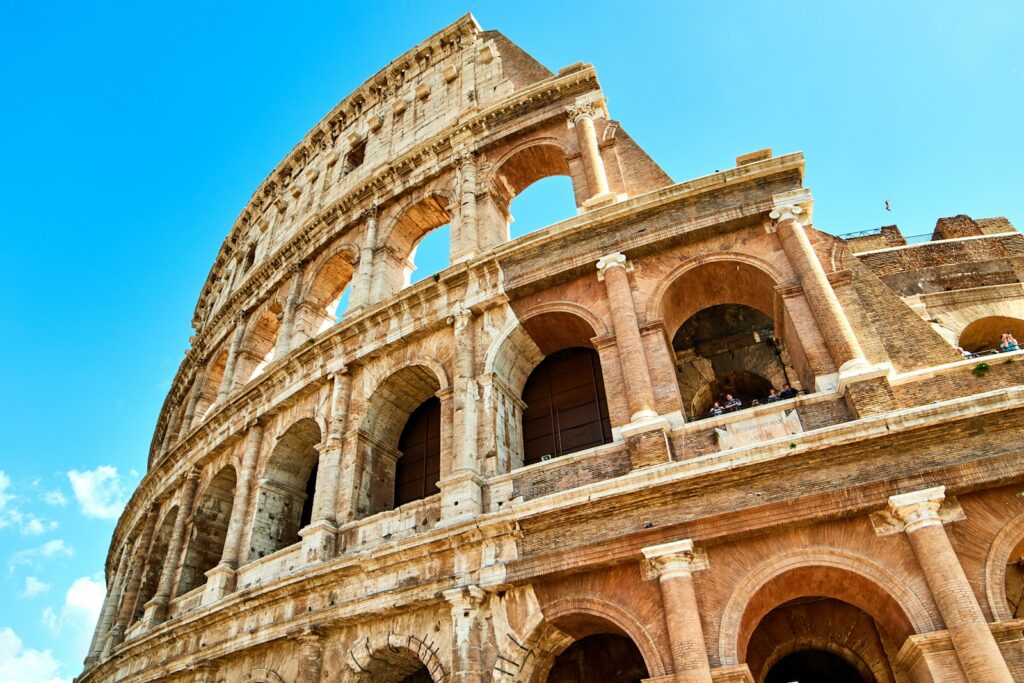
Arenas have a fascinating history that goes back to Antiquity. The Romans were past masters in the art of building these grand entertainment venues. The Colosseum in Rome, completed in AD 80, remains the most iconic example of that era.
In the Middle Ages, large arenas lost their importance. But the Renaissance saw renewed interest in these imposing structures. In Spain, bullrings began to multiply from the 18th century onwards.
The modern era brought its share of innovations. Building materials evolved, allowing bolder structures. Architects pushed the limits, creating ever larger and more spectacular arenas.
Today, the largest arenas in the world are no longer dedicated solely to traditional spectacles. They host sporting events, concerts and even conferences. Their versatility has become a major asset.
The Circus Maximus of ancient Rome
Main features and capacity
Let’s now talk about the Circus Maximus, probably the largest arena in history. Imagine a racecourse 600 metres long and 200 metres wide. It is gigantic! Its estimated capacity varies according to the sources, but figures of 150,000 to 250,000 spectators are often quoted. Some historians even put forward a figure of 300,000 people.
The Circus Maximus was mainly used for chariot races. Its U-shaped track allowed spectacular competitions. In the centre, a long wall called the “spina” acted as a divider and was decorated with statues and obelisks.
The stands, first in wood and later in stone, rose over several levels. The top tier was reserved for the common people, while senators occupied the best seats near the track.
Historical and cultural impact
The importance of the Circus Maximus in Roman society was immense. It was much more than a place of entertainment. Chariot races were a major political and social event. The factions (teams) had their diehard supporters, and betting was rife.
Emperors often used the Circus to show themselves to the people and win their favour. Julius Caesar had his imperial box built there, overlooking the arena. It was a way of displaying his power and his bond with the Roman people.
The Circus Maximus inspired many arenas throughout the Roman Empire. Its influence can still be felt today in the design of some modern stadiums.
Unfortunately, few remains of the Circus Maximus survive. But its imprint on Rome’s urban landscape is still visible. The site is now a public park, where Romans come to relax and where cultural events are held.
Contemporary high-capacity arenas
The modern criteria for size
Today, when we talk about the largest arenas in the world, we often think of football or rugby stadiums. These modern facilities compete in ingenuity to offer spectators a unique experience.
Capacity remains an important criterion, but it is no longer the only one. Spectator comfort has become paramount. Seats are wider and sightlines optimised. Acoustics are also a key factor, especially for concerts.
Accessibility is another crucial point. Large modern arenas must be able to take in and evacuate tens of thousands of people quickly. This requires suitable transport infrastructure.
Finally, versatility is a must. An arena that can host matches as well as concerts or conferences is a major economic asset for a city.
The best-known examples
Among the most impressive contemporary arenas is the Maracanã in Rio de Janeiro. This legendary stadium can hold nearly 80,000 spectators. It has been the stage for historic moments, such as the 2014 World Cup final.
In Europe, Barcelona’s Camp Nou is a giant with its 99,354 seats. It is the largest stadium on the continent. Its dizzying tiers create a unique atmosphere on match nights.
In the United States, Michigan Stadium, nicknamed “The Big House”, holds the capacity record for an American football stadium with 107,601 seats. The atmosphere is electric during college games.
In Asia, the May Day Stadium in Pyongyang, North Korea, claims a capacity of 150,000 spectators. However, this figure is disputed and hard to verify.
These modern arenas are genuine feats of architecture. They combine cutting-edge technology and innovative design to give spectators an unforgettable experience.
Exploring the great bullrings
Las Ventas in Madrid: the benchmark
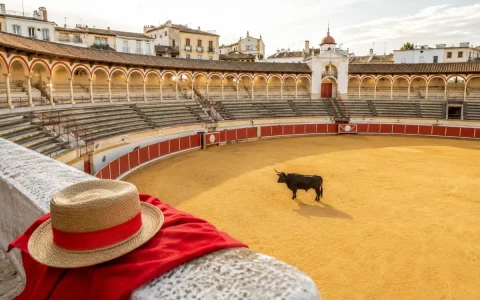
Let’s now change register and dive into the fascinating world of bullrings. Las Ventas in Madrid is undoubtedly the world benchmark. Built in 1929, it can hold more than 23,000 spectators.
Its neo-Mudéjar architecture is a true masterpiece. The red bricks and white ceramics create a striking contrast. The ring itself measures 60 metres in diameter, offering an ideal space for the corrida.
Las Ventas is not just a venue. It is also a powerful cultural symbol for Madrid and for the whole of Spain. Triumphing at Las Ventas is every torero’s dream. In the bullfighting world it is often said that “Madrid awards and withdraws the diplomas”.
I have been lucky enough to attend a corrida at Las Ventas. The atmosphere is unique. The knowledgeable, demanding crowd gives the toreros no quarter. But when the performance lives up to expectations, the ovation is deafening.
Comparison with other bullrings
Although Las Ventas is the most prestigious, it is not the largest bullring. That title goes to the Plaza México in Mexico City. With 41,262 seats, it is the largest bullring in the world.
In Spain, the Maestranza in Seville is another legendary ring. Smaller than Las Ventas with its 12,000 seats, it makes up for it with its incomparable charm. Its Baroque architecture and blue ceramics make it an architectural gem.
The bullring in Ronda, Andalusia, also deserves a mention. Although more modest in size (5,000 seats), it is considered the oldest in Spain. Its spectacular setting, overlooking the Tajo gorge, makes it a unique place.
In France, the Arènes de Nîmes stand out. Built in the 1st century AD, they are a remarkable relic of Roman architecture. Today they host corridas but also concerts and cultural events.
Each of these rings has its own personality, history and traditions. They are much more than simple entertainment venues. They embody a culture and a passion, and continue to fascinate millions of visitors every year.
Modern multi-purpose stadiums
Capacity and architectural innovation
Modern stadiums keep pushing the limits of capacity and architectural innovation. Take AT&T Stadium in Texas. Nicknamed “Jerry World”, it can hold up to 100,000 spectators for certain events. Its most remarkable feature? A giant suspended screen 60 metres long!
Munich’s Allianz Arena is another example of innovation. Its façade, made up of 2,760 ETFE panels, can change colour, creating an impressive light show visible for miles.
These stadiums are not only big, they are smart. Tottenham Hotspur Stadium in London has a retractable pitch, allowing it to host football matches as well as concerts or NFL games.
Outstanding examples of mega-stadiums
Beijing’s National Stadium, nicknamed the “Bird’s Nest”, is an architectural masterpiece. Built for the 2008 Olympic Games, it can hold 80,000 spectators. Its interwoven structure makes it a building unlike any other in the world.
In Australia, the Melbourne Cricket Ground (MCG) impresses with its versatility. With a capacity of 100,024, it hosts cricket as well as Australian rules football, rugby and concerts.
The Stade de France, near Paris, also deserves a mention. Opened in 1998, it can hold 81,338 spectators. Its unique feature? A roof that seems to float above the stands, supported by 18 pylons.
These mega-stadiums are true technical feats. They offer spectators an immersive experience while meeting the challenges of safety and sustainable development.
Final ranking of the five largest arenas
Ranking methodology
Ranking the largest arenas in the world is no easy task. Several criteria need to be taken into account. Capacity is obviously important, but it is not the only factor.
I decided to also consider the historical and cultural importance of each arena. Its impact on architecture and its influence in the world of sport or entertainment also come into the equation.
Versatility is another crucial criterion. An arena able to host different types of events scores extra points.
Finally, I took into account expert opinion and spectator feedback. A great arena must also offer a memorable experience to those who visit it.
The surprising top 5
So here is my ranking of the five largest arenas in the world, based on these criteria:
1. The Circus Maximus (Rome, Italy): Although it no longer exists in its original form, it remains the largest arena ever built. Its estimated capacity of 150,000 to 250,000 spectators has never been equalled.
2. Rungrado May Day Stadium (Pyongyang, North Korea): With a stated capacity of 150,000, it is officially the largest stadium in the world today. However, this figure is disputed by some experts.
3. Michigan Stadium (Ann Arbor, United States): Nicknamed “The Big House”, it can hold 107,601 spectators. It is the largest stadium in the United States and the third largest in the world.
4. Sardar Patel Stadium (Ahmedabad, India): Recently renovated, it can now hold 132,000 spectators, making it the largest cricket stadium in the world.
5. Camp Nou (Barcelona, Spain): With 99,354 seats, it is the largest stadium in Europe. Its unique atmosphere during FC Barcelona matches makes it a legendary venue in world football.
This ranking may come as a surprise. It mixes ancient arenas, modern stadiums and sometimes little-known facilities. That is precisely what makes the subject so fascinating. Each of these arenas has its own history and unique character, and contributes in its own way to the story of humanity’s great gathering places.
The future of giant arenas
Future trends and innovations
The future of giant arenas looks exciting. Architects and engineers keep pushing back the limits of what is possible. Several trends are emerging for the future.
Environmental responsibility is a central concern. Future arenas will have to be more sustainable. We are already seeing stadiums fitted with solar panels or using rainwater harvesting systems. This trend is set to grow.
Technology will play an increasing role. Smart stadiums are multiplying. Imagine seats that automatically adapt to your body shape, or holographic screens that let you replay an action from every angle.
Augmented reality could transform the spectator experience. With special glasses, you could access real-time statistics or watch instant replays without taking your eyes off the action.
Modularity will also be key. Future arenas will need to transform quickly to host different types of events. Perhaps we will see movable stands or retractable roofs become the norm.
Finally, the spectator experience will be a central concern. Queues could disappear thanks to facial recognition systems. Food could be delivered straight to your seat by drone.
These innovations will redefine what it means to attend an event in a large arena. The aim? To create ever more immersive and memorable experiences for spectators.
A fascinating journey through the largest arenas
Our exploration of the largest arenas in the world is coming to an end, but what a fascinating adventure it has been! From the remains of the Circus Maximus to today’s high-tech stadiums, we have travelled through time and space.
I hope you enjoyed this journey to the heart of these legendary places as much as I did. Whether it is bullrings like Las Ventas or modern stadiums like AT&T Stadium, each one tells a unique story.
So, what is the largest arena in the world? The answer is not so simple. In terms of sheer capacity, Rungrado May Day Stadium in North Korea claims the title. But greatness is not measured in figures alone. The historical importance of the Circus Maximus or the innovation of Tottenham Hotspur Stadium count just as much.
What is certain is that these giant arenas will continue to fascinate us. They move with the times, integrating new technologies to offer ever more immersive experiences. I can’t wait to see what the future holds!
And you, which arena do you dream of visiting? Perhaps you will be lucky enough to attend an event in one of these architectural wonders. In the meantime, I hope this article has made you want to learn more about these extraordinary places that have been drawing crowds for thousands of years.