Bullfighting, the emblematic spectacle of Spanish culture, has fascinated and divided people for centuries. But who invented the corrida? The question sparks plenty of debate among historians and bullfighting enthusiasts. Let’s dive together into the fascinating history of this tradition with mysterious origins. I invite you to discover the many theories about the birth of this controversial art, from Muslim influence to medieval bull games. You will learn how figures such as Francisco Romero shaped the modern corrida we know today.
The many theories about its ancient origins
The history of the corrida is a fascinating subject that gives rise to much debate. Let’s look together at the most widespread theories about its origins. You will see just how deep and complex the roots of this tradition are.
The theory of a Muslim origin
Many historians believe that the corrida has its roots in Muslim culture. The Moors occupied the Iberian Peninsula for nearly eight centuries, after all. They brought with them their own equestrian and bull traditions.
Picture the Moorish horsemen, proud and skilful, taking on bulls during lavish festivities. These spectacles are thought to have inspired the earliest forms of the corrida. Spanish nobles, impressed by the courage and dexterity of the Moors, are said to have gradually adopted and adapted these practices.
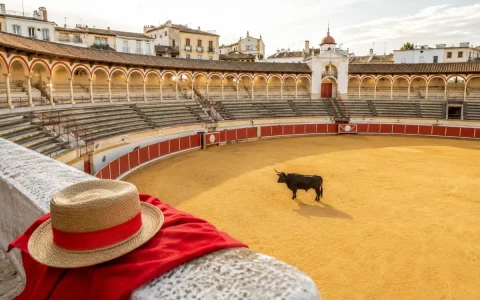
I was lucky enough to visit Andalusia, the cradle of Spanish bullfighting. There I felt the deep influence of Arab-Andalusian culture. The bullring in Seville, for example, still bears witness to this unique cultural fusion.
A possible Roman influence
Another fascinating theory points to the Roman legacy. The circus games, so popular in the Roman Empire, often included fights between men and wild animals, bulls among them.
Some experts see these spectacles as the forerunners of the modern corrida. They highlight the similarities between Roman amphitheatres and today’s bullrings. The idea of a clash between man and beast as public entertainment has its roots here.
On a trip to Spain, I visited the ruins of an ancient Roman amphitheatre. I was struck by how much it resembled modern bullrings. It is easy to imagine the spectacles that took place there centuries ago.
The medieval development of the corrida
Now that we have explored the theories about its ancient origins, let’s turn to how the corrida evolved in the Middle Ages. This period played a crucial role in shaping the tradition as we know it today.
Bull games in the Middle Ages
In the Middle Ages, bull games took on an important place in Spanish society. These spectacles, still far from the modern corrida, were varied and often improvised. Horsemen could be seen taking on bulls during popular festivals.
Alfonso II of Asturias is said to have been the first monarch to fight a bull on horseback, in the 8th century. Although hard to verify, this anecdote shows how old the tradition is. Spanish nobles saw these encounters as a chance to demonstrate their courage and skill.
I once had the opportunity to attend a historical re-enactment of these medieval games. The atmosphere was electric, and I could feel the excitement that must have reigned at these events centuries ago.
The role of royal and noble festivities
Royal and noble festivities played an essential role in the development of the corrida. These lavish events often featured bullfights as the main entertainment. Kings and nobles took part in the games themselves, reinforcing their prestige and authority.
These spectacles grew in popularity and sophistication over time. Rules began to take shape, and the first professional bullfighters appeared. The corrida gradually became a codified art, with its own techniques and rituals.
When I visited the Royal Palace in Madrid, I was able to admire paintings depicting these royal festivities. The grandeur and importance of these events for the society of the time are palpable.
The impact of Francisco Romero on the modern corrida
Having explored the medieval origins of the corrida, we now reach a major turning point in its history. In the 18th century, one man would revolutionise this art and lay the foundations of the modern corrida: Francisco Romero.
18th-century innovations
Francisco Romero, from Ronda in Andalusia, is regarded as the father of the modern corrida. His most striking innovation was introducing the estocada on foot. Before him, toreros fought mainly on horseback.
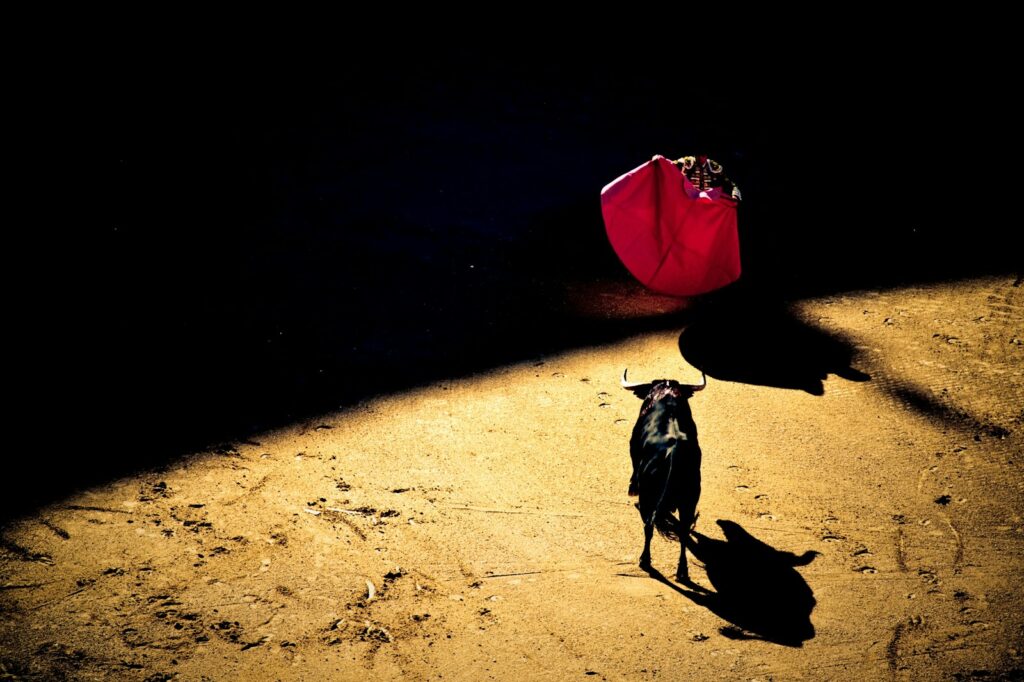
Picture the scene: for the first time, a man faces the bull on foot, armed only with a sword and a red cloth. This development brought a new dimension to the spectacle, combining courage, technique and closeness to the animal.
I was lucky enough to visit Ronda and its famous bullring. It is impressive to stand where Romero probably developed his revolutionary techniques.
The evolution of techniques and rules
Romero’s innovations were not limited to the estocada on foot. He also helped to codify the different phases of the corrida. A clearer structure emerged, with distinct moments such as the pic, the banderillas and the kill.
These changes profoundly transformed the nature of the spectacle. The corrida became an art in its own right, with its own rules, techniques and aesthetics. Toreros were no longer mere fighters but artists who had to master a set of precise and elegant moves.
Watching a modern corrida, I was able to see how these rules, laid down centuries ago, still structure the spectacle today.
The influence of bullfighting treatises
The evolution of the corrida did not stop with Francisco Romero. Over time, bullfighting treatises played a crucial role in codifying and passing on this art. Let’s look together at the impact of two major figures: Pepe Hillo and Paquiro.
Pepe Hillo’s contribution
José Delgado Guerra, better known as Pepe Hillo, is an emblematic figure of 18th-century bullfighting. In 1796 he published “La Tauromaquia o el arte de torear”, the first complete treatise on the art of the corrida.
This groundbreaking book details the techniques, rules and spirit of the corrida. In it, Pepe Hillo shares his experience and codifies the practices of his time. His work quickly became an essential reference for toreros and aficionados.
I once had the chance to leaf through a reproduction of this treatise. It is fascinating to see how precisely Pepe Hillo describes moves that can still be seen in the bullring today.
The impact of Paquiro’s treatise
A few decades later, Francisco Montes, known as Paquiro, published a treatise of his own that left its mark on bullfighting history. His “Tauromaquia completa” of 1836 deepened and updated Pepe Hillo’s work.
Paquiro introduced new techniques and refined the structure of the corrida. He stressed the importance of the torero’s physical and mental preparation. His treatise also set out a clear hierarchy within the bullfighting team, defining everyone’s role.
When I visited a bullfighting school in Spain, I saw that Paquiro’s teachings are still passed on to young toreros in training.
Historical controversies over its origin
Despite all these historical elements, the exact origin of the corrida remains a matter of heated debate. Historians and aficionados continue to discuss and analyse the different theories. Let’s explore together the controversies that fuel the fascination with this centuries-old art.
Debates among historians
Historians do not all agree on the true origins of the corrida. Some argue for a purely Spanish origin, going back to ancient pastoral practices. Others insist on the decisive influence of foreign cultures, notably Muslim and Roman.
These debates also concern the precise dating of the earliest forms of the corrida. Some trace it back to Antiquity, while others place its birth in the Middle Ages. Each theory rests on different historical documents, accounts and interpretations.
I attended a fascinating lecture in which two historians defended opposing views on these origins. The exchange was lively and illustrated the complexity of the question well.
No definitive consensus
Despite years of research and study, there is still no definitive consensus on the exact origin of the corrida. This lack of agreement fuels the fascination with the tradition and adds to its mystery.
This uncertainty reminds us that the history of the corrida is closely bound up with that of Spain and its many cultural influences. It reflects the richness and complexity of Spanish history.
Talking with aficionados, I was struck by the passion with which they defend their theories about the origin of the corrida. This diversity of opinion adds to the richness of the debate and the vitality of the tradition.
The evolution of the corrida over the centuries
The history of the corrida does not end with its disputed origins. Over the centuries, the tradition has evolved a great deal, adapting to social and cultural change. Let’s see together how the corrida was transformed into the spectacle we know today.
In the 19th century, the corrida enjoyed a true golden age. It became professional and turned into a popular spectacle throughout Spain. The monumental bullrings we know today were built during this period. The figure of the torero took on a heroic dimension and inspired artists and writers.
The 20th century brought further changes. The corrida spread beyond Spain’s borders, notably to France and Latin America. It also had to adapt to changing sensibilities, with rules aimed at limiting animal suffering.
I had the opportunity to visit the bullfighting museum in Madrid. It is fascinating to see how the costumes, techniques and atmosphere of corridas have changed over time.
The corrida today: heritage and traditions
Today, the corrida remains a living tradition, even though it sparks more and more debate. It continues to draw passionate crowds in the regions where it is practised. Ferias, the great bullfighting festivals, are high points of Spanish cultural life.
The techniques and values of bullfighting continue to be passed on in bullfighting schools. These institutions train the new generation of toreros, keeping centuries-old know-how alive.
The corrida does, however, face new challenges. Animal rights movements question its legitimacy. Some Spanish regions, such as Catalonia, have even banned the practice.
Attending a feria recently, I saw the fervour that still surrounds the corrida. But I also noticed that the audience was older than it used to be, a sign of the changes under way.
Looking ahead to the future of the corrida
What future for the corrida? The question divides public opinion and experts alike. Some see the current controversies as a sign of inevitable decline. Others believe the corrida will be able to adapt, as it has done in the past.
Initiatives are emerging to reinvent the tradition. Some propose corridas without the kill, while others seek to highlight the cultural and artistic aspects rather than the fight.
The debate about the place of the corrida in modern society is far from over. It reflects broader questions about our relationship with traditions, with animals and with our cultural heritage.
On my last trip to Spain, I had fascinating discussions with young people about how they see the corrida. Their varied and nuanced views made me realise how complex this debate is for Spanish society.
A fascinating heritage that keeps raising questions
At the end of this journey back in time to discover the origins of the corrida, one thing is certain: this centuries-old tradition never ceases to fascinate us and raise questions. From medieval bull games to modern bullrings, by way of Francisco Romero’s innovations, the history of bullfighting is rich and complex.
Who invented the corrida? This seemingly simple question has led us on a fascinating exploration of Spanish history and culture. We have seen that there is no single answer, but rather the result of a long evolution and many influences.
I was particularly struck by the passion of the aficionados I met. Their love for this art, despite the controversies, shows its cultural importance. Attending a corrida recently, I felt all the emotion and tension that fill the bullring.
The corrida continues to evolve and to spark debate. Its future is uncertain, but one thing is sure: it will remain etched in history as a powerful symbol of Hispanic culture. Whether you are a devotee or simply curious, I hope this article has helped you better understand the roots of this unique tradition.
I invite you to keep exploring this fascinating subject. Why not visit a bullfighting school or attend a feria on your next trip to Spain? You may discover a new facet of this complex and captivating cultural heritage.