The corrida, a controversial spectacle yet one deeply rooted in Spanish culture, arouses as much passion as debate. Why is the corrida a tradition that has endured for centuries? Its fascinating history goes back to the Middle Ages, mixing royalty, nobility and bull games. Over time the corrida has evolved into a powerful cultural symbol, particularly in Spain and Latin America. This article explores the origins, evolution and meaning of this bullfighting tradition, while also looking at the controversies surrounding it today. Find out how the corrida became cultural heritage and why it continues to divide public opinion.
The medieval origins of the corrida
The first royal bull runs
The corrida has its roots in medieval Spain. As early as the 8th century, there are traces of bull games at the court of King Alfonso II of Asturias. These primitive spectacles were very different from the modern corrida we know today.
At the time, noblemen hunted the bull on horseback, armed with lances. These displays of bravery and horsemanship served to entertain the court, but also to prepare knights for battle. The king himself sometimes took part in these jousts, thus showing his strength and courage to his subjects.
These first royal bull runs laid the foundations of what would become the Spanish bullfighting tradition. They already combined the notions of spectacle, prowess and challenge in the face of the animal, elements that remain at the heart of today’s corrida.
The nobility and bull games
Over the centuries, bull games spread throughout the Iberian Peninsula. The nobility took up the practice, seeing it as a way of demonstrating their status and worth. Great lords organised corridas for important events such as weddings or coronations.
These spectacles drew crowds and allowed the nobles to shine in the eyes of the people. Skill in facing a bull became a mark of social prestige. This association between nobility and bullfighting helped to anchor the corrida in Spanish culture.
I remember visiting Coca Castle, in Castile and León. In the courtyard you can still see the stone stands where noblemen watched bullfights in the 15th century. It is fascinating to think that these stones witnessed the evolution of this centuries-old tradition.
The emergence of the modern corrida
The role of Francisco Romero
At the beginning of the 18th century, the corrida underwent a major evolution thanks to Francisco Romero. This matador from Ronda, in Andalusia, introduced the use of the muleta, the red cloth used to guide the bull’s movements.
Romero also codified the passes and movements of the torero on foot. He thus turned bullfighting into a genuine art, with its own rules and precise techniques. His contribution was considerable: he laid the foundations of the corrida as we know it today.
Romero’s innovation helped to democratise bullfighting. Previously reserved for the mounted nobility, it became accessible to ordinary men, who could now face the bull on foot. This development marked a turning point in the history of the bullfighting tradition.
Evolution in the 18th century
The 18th century saw the corrida become structured and professionalised. The first bullfighting schools appeared, training future matadors in the techniques developed by Romero. Permanent bullrings began to be built in the major Spanish cities.
It was at this time that the various suertes were born, the manoeuvres performed by the torero in front of the bull. The corrida became a codified spectacle, with its own precise rules and rituals. The public became enthusiastic about this new entertainment combining danger, grace and courage.
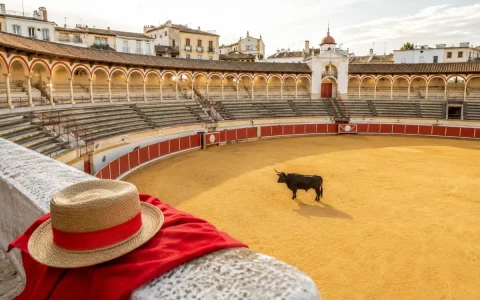
I was lucky enough to attend a corrida in the bullring in Seville, built in the 18th century. The atmosphere there is unique: you feel the weight of history and tradition at every moment. It is an experience that helps you understand the importance of the corrida in Spanish culture.
The transformation into a popular tradition
The impact on Spanish culture
Over time, the corrida became deeply rooted in Spanish culture. It inspired many artists, writers and painters. Figures such as Goya and Picasso immortalised bullfighting in their works, contributing to its cultural reach.
The corrida became a central element of local festivals, such as San Fermín in Pamplona. These celebrations attract thousands of people every year, combining bullfighting tradition with popular festivities. The bullfighting tradition thus became part of Spain’s intangible heritage.
The language itself has been influenced by the corrida. Many expressions taken from the bullfighting world have entered everyday Spanish vocabulary. For example, “estar al quite” (to be alert, ready to step in) comes from an action of the torero during the fight.
Expansion into Latin America and beyond
The corrida was not confined to Spain. With Spanish colonisation, it was exported to Latin America. In Mexico, Colombia and Peru, bullfighting developed by incorporating local elements.
In these countries, the corrida became an important part of cultural identity. The bullring in Mexico City, for example, is one of the largest in the world and regularly hosts major events in the bullfighting calendar.
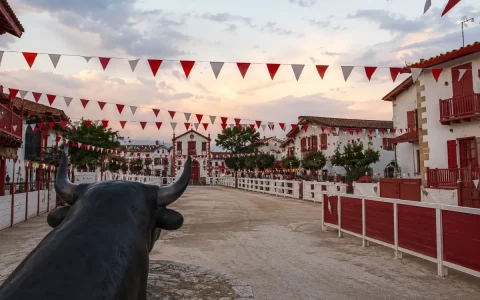
The tradition has even taken hold in certain regions of France, notably in the South. The ferias of Nîmes and Bayonne attract many aficionados every year. This expansion bears witness to the strength and persistence of the bullfighting tradition beyond its original borders.
A living tradition that raises questions
The corrida is a tradition that is complex, rooted in Spanish history and culture for centuries. Its evolution, from medieval bull games to the codified spectacle we know today, shows its ability to adapt over time.
I was fascinated to discover how this practice became a true art, inspiring painters, writers and musicians. The corrida has shaped the cultural identity of Spain and other countries, becoming deeply embedded in local festivals and folklore.
Yet I cannot ignore the controversies surrounding it. The animal welfare debate raises important ethical questions. Society is changing, and with it our relationship with traditions. Why is the corrida a tradition that endures? The question deserves reflection.
Whether you are an aficionado or an opponent, understanding the historical and cultural roots of the corrida is essential. It invites us to reflect on the place of traditions in our modern world, on how our values evolve and on our relationship with the animal world.
I encourage you to explore the subject further, perhaps by visiting a plaza de toros to form your own opinion. Beyond the spectacle, the corrida is a mirror of our ever-changing society.