The corrida, an ancestral spectacle blending tradition and controversy, fascinates as much as it divides. Wondering how to explain the corrida? Let’s dive together into the world of bullfighting, its origins and its present-day debates. I invite you to discover the many facets of this complex ritual, from the sun-drenched bullrings of Spain to the heated discussions it provokes. This article will reveal the secrets of the bullfighting tradition, how it unfolds and what it symbolises, while also addressing the ethical questions that surround it. Ready for a journey into the heart of the bullfighting spectacle?
The historical origins of the corrida
The evolution of bullfighting traditions
The corrida as we know it today has its roots in Antiquity. The first contests between men and bulls date back to Roman times. These primitive spectacles evolved over the centuries to give rise to the bullfighting tradition we know.
In the Middle Ages, the Spanish nobility practised bullfighting on horseback. It was an exercise of skill and bravery reserved for the elite. The riders had to show their courage by facing the bull without dismounting. This form of equestrian bullfighting lasted until the 18th century.
It was during the 18th century that bullfighting on foot developed. Toreros from the common people began to face the bull on the ground, armed with a cape and a sword. This evolution democratised the spectacle and gave it its present form.
Cultural and geographical influences
The corrida became particularly rooted in Spanish culture. There it symbolises man’s struggle against the forces of nature. Each region developed its own bullfighting traditions, with specific styles and costumes.
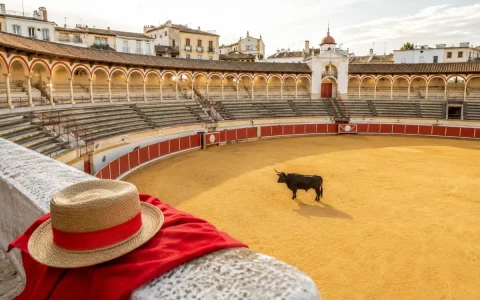
In Andalusia, for example, the cradle of many great matadors such as Juan Belmonte, the corrida holds particular importance. The ferias of Seville are among the most prestigious in the world. The Maestranza bullring welcomes thousands of aficionados there every year.
The tradition was also exported to Latin America with Spanish colonisation. In Mexico, Peru and Colombia, the corrida blended with local cultures to give rise to original variants.
How a typical corrida unfolds
The crucial role of the sorteo
Even before the spectacle begins, a crucial step takes place behind the scenes: the sorteo. This is the draw that determines which matador will face which bull. It is a decisive moment, because the characteristics of each animal can greatly influence how the fight unfolds.
I was lucky enough to attend a sorteo at a corrida in Madrid. The atmosphere was electric. The matadors and their teams studied the bulls carefully in the corrales, trying to guess how they would behave. Chance plays an important role here, adding a dose of unpredictability to the spectacle.
The paseo: a ceremonial entrance
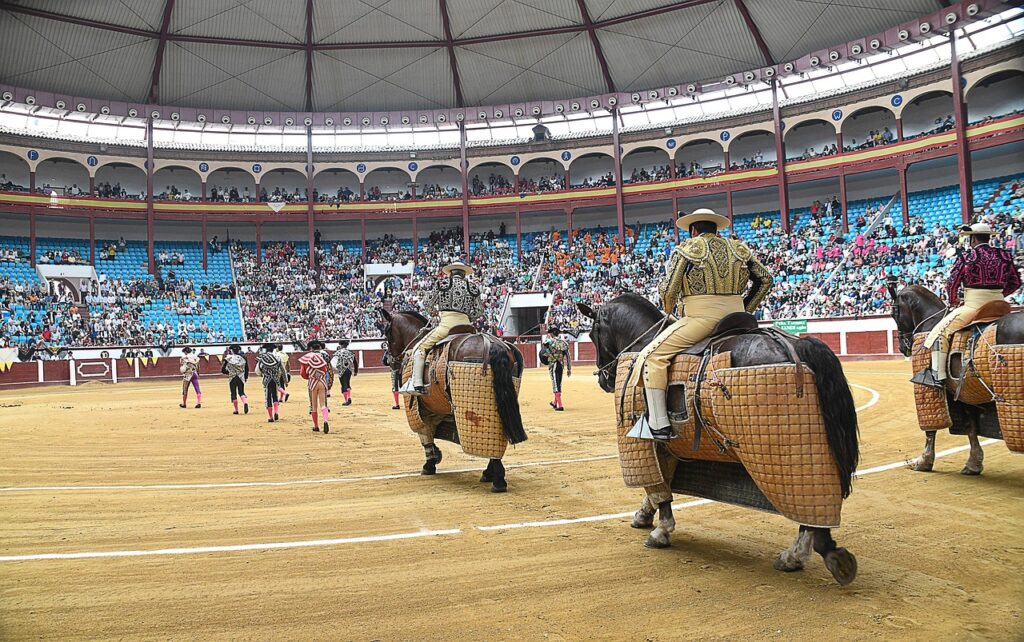
The corrida truly begins with the paseo. This is the solemn entrance of the toreros and their teams into the arena. Dressed in their suits of lights, they parade to the sound of pasodobles. This moment is steeped in tradition and symbolism.
At the head of the procession are the alguaciles on horseback. They are followed by the matadors, then the banderilleros and the picadors. Each torero salutes the president of the corrida before taking his place. The atmosphere is already electric, and the crowd holds its breath in anticipation of the fight.
The three tercios of the fight
The tercio de varas: testing bravery
The first act of the corrida is the tercio de varas. Its purpose is to test the bull’s bravery and to weaken it ahead of the kill. The picador, mounted on a protected horse, pricks the bull with a lance. This phase makes it possible to assess the animal’s fighting spirit.
I have seen bulls charge with impressive force during this phase. Their power is such that they can sometimes lift the horse and its rider. It is an intense moment that sets the tone for the rest of the fight.
The tercio de banderillas: the art of precision
Next comes the tercio de banderillas. The banderilleros must plant sticks decorated with coloured ribbons in the bull’s back. This exercise requires a great deal of skill and courage. The banderilleros get as close as possible to the animal to place their banderillas with precision.
This tercio often offers graceful and spectacular movements. The banderilleros elegantly dodge the bull’s charges before planting their banderillas. The crowd holds its breath at every pass, full of admiration for such daring.
Muleta and the kill: the climax
The last tercio is that of the muleta and the kill. This is when the matador truly takes centre stage. Armed with his red cape (the muleta) and his sword, he must dominate the bull through a series of passes before delivering the final estocada.
This phase concentrates all the symbolism of the corrida. The matador must show courage, elegance and mastery in the face of the bull’s brute force. Each pass is a display of art and technique. The crowd holds its breath until the final estocada which, if well delivered, brings about the animal’s swift death.
Symbolism and ritual in the corrida
Visual codes and their meaning
The corrida is rich in symbols and rituals. Every gesture, every colour has a particular meaning. The matador’s costume, the suit of lights, is for example laden with symbols. Its gold embroidery evokes the sun and life, while the sequins represent the stars.
Colours also play an important role. The red of the muleta symbolises blood and passion. Yellow and pink are associated with lightness and grace. Even the torero’s movements are codified. Each pass has its own name and meaning.
I was fascinated by these codes at my first corrida. Watching how the matador Manolete used his cape to guide the bull was like witnessing a mysterious dance whose steps I did not fully know. It is a true visual language that unfolds in the arena.
The rules and rewards of the spectacle
The pardon and judging the bull
The course of a corrida is strictly regulated. The president of the corrida ensures that the rules are respected and can grant rewards according to the matador’s performance and the bull’s behaviour.
If the bull has shown exceptional bravery, it can be pardoned. This is a rare honour, granted to animals that have displayed extraordinary courage. In that case, the bull is treated and returns to the ranch to become a breeding sire.
The honours awarded to the matador
The matador can also be rewarded for his performance. Depending on the quality of his work, the crowd can ask the president to award him one or two of the bull’s ears, or even the tail in exceptional cases.
These trophies are very important marks of recognition in the bullfighting world. A matador who leaves through the main gate of the bullring, carried shoulder-high by the crowd, has reached the pinnacle of his art.
The debates and controversies surrounding the corrida
Arguments in favour of the tradition
Supporters of the corrida highlight its cultural and historical importance. For them, it is an art that symbolises man’s struggle against nature. They also stress the economic importance of bullfighting, which provides a living for many people.
The Federation of Bullfighting of Spain fervently defends this tradition. It emphasises the corrida’s role in preserving the toro de lidia, a specific breed of bull that would no longer exist without this spectacle.
Ethical criticism and anti-bullfighting movements
Opponents of the corrida, for their part, denounce cruelty to animals. For them, this spectacle no longer has a place in a modern society that cares about animal welfare. Anti-bullfighting movements have developed, organising demonstrations and lobbying for the practice to be banned.
These debates are particularly heated in Spain, where the corrida is listed as intangible cultural heritage. Some regions, such as Catalonia, have banned corridas, while others fiercely defend them.
The impact of the corrida on culture and society
The corrida in art and literature
The corrida has left a deep mark on Spanish culture and beyond. Many artists have drawn inspiration from this spectacle. Painters such as Goya and Picasso depicted bullfighting scenes in their works. In literature, Ernest Hemingway helped make the corrida known in the English-speaking world with his novel “The Sun Also Rises”.
Music is not to be outdone. The pasodoble, the traditional music of the corrida, has become a musical genre in its own right. Classical composers such as Bizet also drew on the world of bullfighting in their works.
The corrida and changes in society
Today, the place of the corrida in society is being called into question. Environmental concerns and care for animal welfare are gaining ground. The younger generation seems less attached to this tradition than its elders.
Yet the corrida still has its defenders. For them, it is an integral part of Spanish cultural identity. Bullrings such as Las Ventas in Madrid remain iconic venues, still attracting large numbers of spectators.
Future prospects for the corrida
The future of the corrida is uncertain. Caught between tradition and modernity, it must find its place in a changing society. Some suggest possible adaptations, such as corridas without the kill. Others remain attached to the traditional form of the spectacle.
The debate remains open. Will the corrida continue to captivate the crowds, or will it eventually disappear? Only time will tell. In the meantime, it remains a subject of passion and controversy, reflecting the tensions between tradition and modernity in our society.
A tradition between passion and controversy
At the end of this journey into the heart of the corrida, we have explored together the many facets of this centuries-old tradition. From the dusty bullrings of Andalusia to the heated debates stirring our society, the corrida leaves no one indifferent. I hope I have given you the keys to better understand this complex and controversial spectacle.
Whether you are an aficionado or an opponent, you have to admit that the corrida holds a unique place in Spanish history and culture. It embodies a living heritage made of rituals, symbols and passion. But it also raises important ethical questions about our relationship with animals.
The future of the corrida is uncertain. Between tradition and changing attitudes, it will no doubt have to reinvent itself to survive. Perhaps we will see new forms of bullfighting emerge, without the kill? Or will the corrida eventually disappear, a relic of a bygone era?
La corrida de toros expliquée à mon ami mangeur de tofu (The corrida explained to my tofu-eating friend)
For those who want to deepen their understanding of the corrida, the book “La corrida de toros expliquée à mon ami mangeur de tofu” is essential reading. Written by Jean-Christian Domergue, a passionate aficionado from Nîmes who has settled in Andalusia, this book offers a unique and illuminating perspective on this controversial art.
JC Domergue, who organises ganadería visits through his agency “Les visites du campo bravo“, shares his expertise and experience to demystify bullfighting. I had the opportunity to take part in one of his visits to the Lora Sangran ganadería, near Seville, and saw for myself the depth of his knowledge. The book’s cover, by Jonathan Veyrunes, a former torero from Nîmes turned painter in Seville, adds an artistic touch that reflects the very essence of the corrida.
This book does not seek to convince but to inform, answering the fundamental questions you might ask yourself before attending a corrida. Whether you are curious or sceptical, “La corrida de toros expliquée à mon ami mangeur de tofu” is an invitation to discover a complex and fascinating world, where passions run high and every emotion finds its place.

I invite you to form your own opinion on the subject. If you get the chance, attend a corrida to live this unique experience. Or get involved in the movements campaigning for its abolition. Whatever your position, bear in mind the cultural richness and complexity of this tradition.
I hope this article has helped you better grasp the issues surrounding the corrida. Feel free to explore the subject further by reading the works of the great bullfighting writers or by talking with aficionados. It is through dialogue that we can find a balance between preserving heritage and respecting animal welfare.
So, in the end, how do you explain the corrida? It is a spectacle that fascinates as much as it divides, an ancestral art facing the challenges of modernity. It is up to you to make up your own mind about this very singular tradition!